|
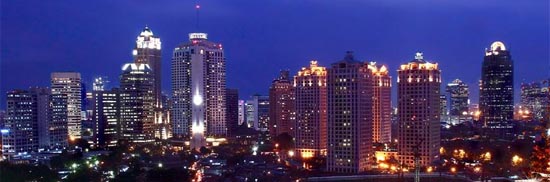
Jakarta is the capital city of the Republic of Indonesia, a country composed of more than 13,000 islands with a population of over 180 million. Comprising more than 300 ethnic groups speaking 200 different languages, the Indonesia population exhibits marked diversity in its linguistic, culture, and religious traditions. As the Capital City, Jakarta is a melting pot of representatives from each of these ethnic groups. Jakarta is a special territory enjoying the status of a province, consisting of Greater Jakarta, covering of 637.44 square km area. Located on the northern coast of West Java, it is the center of government, commerce and industry and has an extensive communications network with the rest of the country and the outside world. Strategically positioned in the archipelago, the city is also the principal gateway to the rest of Indonesia. From the Capital City, sophisticated land, air, and sea transport is available to the rest of the country and beyond.
| Hotels and Resorts in Jakarta |
| Hotel Name |
Star Rating
|
Rates
|
| ALiLA Jakarta Hotel |
|
|
| Ambhara Hotel |
|
|
| Apartment Juanda |
|
|
| Aston Marina Hotel & Residence |
|
|
| Aston Rasuna Residence |
|
|
| Atlet Century Park |
|
|
| Batavia Apartment |
|
|
| Bintang Griyawisata |
|
|
| Borobudur Hotel |
|
|
| Bumi Karsa Bidakara |
|
|
| Cemara Hotel |
|
|
| Ciputra Jakarta Hotel |
|
|
| Crowne Plaza Jakarta Hotel |
|
|
| F1 Hotel |
|
|
| FM7 Resort Hotel |
|
|
| FORMULA 1 CIKINI Hotel |
|
|
| Four Seasons Hotel |
|
|
| Golden Boutique Hotel |
|
|
| Golden Boutique Melawai Hotel |
|
|
| Gran Mahakam Hotel |
|
|
| Grand Asia Hotel |
|
|
| Grand Cempaka Hotel |
|
|
| Grand Hyatt Hotel |
|
|
| Grand Kemang Hotel |
|
|
| Grand Tropic Suites Hotel |
|
|
| Harris Tebet Hotel |
|
|
| Hotel Indonesia Kempinski Jakarta |
|
|
| Hotel Mega Anggrek I |
|
|
| Hotel Mega Anggrek II |
|
|
| Hotel Melawai |
|
|
| Hotel Mulia Senayan |
|
|
| Ibis Kemayoran Hotel |
|
|
| Ibis Mangga Dua Hotel |
|
|
| Ibis Slipi Hotel |
|
|
| Ibis Tamarin Hotel |
|
|
| Imperial Aryaduta Hotel |
|
|
| Intercontinental MidPlaza Hotel |
|
|
| Jakarta Airport Hotel |
|
|
| Jayakarta Tower Hotel |
|
|
| JW Marriott Jakarta |
|
|
| Kartika Chandra Hotel |
|
|
| Kristal Hotel |
|
|
| Le Grandeur Mangga Dua Hotel |
|
|
| Le Meridien Hotel |
|
|
| Manhattan Hotel |
|
|
| Menara Peninsula Hotel |
|
|
| Mercure Convention Center |
|
|
| Millennium Hotel Sirih Jakarta |
|
|
| Nikko Hotel |
|
|
| Novotel Mangga Dua Hotel |
|
|
| Orchardz Hotel |
|
|
| Paragon Hotel |
|
|
| Patra Hotel |
|
|
| Puri Casablanca (Apartment) |
|
|
| Redtop Hotel |
|
|
| Sahid Jaya Hotel |
|
|
| Sanno Hotel |
|
|
| Sari Pan Pacific Hotel |
|
|
| Shangri-la Hotel |
|
|
| Sheraton Bendara Hotel |
|
|
| Somerset Grand Citra (Apartment) |
|
|
| Somerset Permata Berlian (Apartment) |
|
|
| Sparks Hotel |
|
|
| Sunlake Hotel |
|
|
| The Aryaduta Suites Hotel Semanggi |
|
|
| The Dharmawangsa Hotel |
|
|
| The Kuningan Suites (Formerly Apartemen Kuningan) |
|
|
| The Park Lane Jakarta Hotel |
|
|
| The Residence Apartment |
|
|
| The Ritz Calton Pacific Place Hotel |
|
|
| The Ritz-Calton Jakarta Hotel |
|
|
| The Sultan (Formerly Jakarta Hilton International) |
|
|
| Travellers Hotel Jakarta |
|
|
| Twin Plaza (Formerly Park Plaza Hotel) |
|
|
| |
| Hotels and Resorts in Puncak |
| Hotel Name |
Star Rating
|
Rates
|
| Delamar Palasari Hotel |
|
|
| Jayakarta Hotel |
|
|
| Novus Hotel |
|
|
| Puncak Inn Resort |
|
|
| Resort Prima Cipayung |
|
|
| Resort Prima Cisarua |
|
|
| Resort Prima Coolibah |
|
|
| Surya Indah Hotel |
|
|
|
|
Information and pictures courtesy of Indonesia Tourism. |
|