|
---- People & Culture -----
Borneo Cultures
The Southeast Asian island of Borneo third largest island in the world has captivated the imagination of explorers and travellers for centuries with its alluring mix of indigenous culture and untamed rainforest. 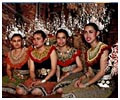
Approximately 16 million people live on the island of Borneo, which is shared by Malaysia, Indonesia and Brunei Darussalam. The island's population is comparatively low for the region, owing largely to the fact that up until a few decades ago, Borneo was completely covered by dense rainforest with poor soil for agriculture. This, combined with rugged terrain, unnavigable rivers and the fierce head-hunter reputation of its inhabitants, ensured that the island remained underdeveloped for many years, giving Borneo a legendary mystique as one of the most mysterious and exotic places on Earth. For thousands of years, this image was fairly close to the truth. Borneo has been inhabited for at least 35,000 years, and life for 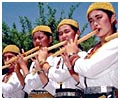 many Borneans has changed little over the centuries. Most people lived in harmony with nature, leading nomadic or semi-nomadic lifestyles, travelling over vast areas in search of wild boar and other products of the forest. many Borneans has changed little over the centuries. Most people lived in harmony with nature, leading nomadic or semi-nomadic lifestyles, travelling over vast areas in search of wild boar and other products of the forest. Around three thousand years ago, traders from other lands began to frequent Borneo, connecting the island to a larger trading network extending to China, India, and beyond. Locals collected exotic products like bird's nests and sandalwood for trade abroad but otherwise, life went on as before. Approximately 500 years ago, Islam arrived to the island, and a number of Muslim kingdoms were established, the largest of which was Brunei, which once controlled most of the northern coast. The name Borneo is in fact derived from the name Brunei. Brunei Specialities
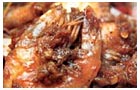 Today, Borneo is still home to thousands of indigenous ethnic minorities which add to the islands diversity and local colour. While Borneo is rapidly modernising, indigenous culture still thrives, evident in the many traditional longhouse communities that dot the landscape of Brunei and in the native handiworks and crafts they continue to produce. Headhunting, however, is a pastime which thankfully has retreated into legend! Today, Borneo is still home to thousands of indigenous ethnic minorities which add to the islands diversity and local colour. While Borneo is rapidly modernising, indigenous culture still thrives, evident in the many traditional longhouse communities that dot the landscape of Brunei and in the native handiworks and crafts they continue to produce. Headhunting, however, is a pastime which thankfully has retreated into legend! Epicures will enjoy the vast array of cuisine that Brunei offers, ranging from home-cooked local specialties to the finest of international cuisines. 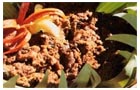 One will find that Bruneian fare generally exudes a unique flavour of cultural fusion due to the influence of the various nations that have left their mark on Bruneis culture. Arab, Indian and Chinese traders, European explorers and, of course, Malay and indigenous Bornean peoples have each introduced their own cooking styles and ingredients, adding to the masterful fusion that makes Bruneis cuisine memorable. Arts
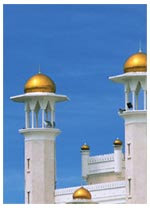 Brunei Darussalam is richly endowed with a cultural heritage that the government and the people have worked tirelessly to maintain. The nations Arts and Handicraft Centre, for example, is a living testimony to the preservation and the proliferation of the arts and crafts for which Brunei was once renowned, including boat making, silversmithing, bronze tooling, weaving and basketry. Visitors will also find Malay weaponry, wood carvings, traditional games, traditional musical instruments, silat (the traditional art of self defence) and decorative items for women to be some of Bruneis most unique cultural offerings. Brunei Darussalam is richly endowed with a cultural heritage that the government and the people have worked tirelessly to maintain. The nations Arts and Handicraft Centre, for example, is a living testimony to the preservation and the proliferation of the arts and crafts for which Brunei was once renowned, including boat making, silversmithing, bronze tooling, weaving and basketry. Visitors will also find Malay weaponry, wood carvings, traditional games, traditional musical instruments, silat (the traditional art of self defence) and decorative items for women to be some of Bruneis most unique cultural offerings. The introduction of Islam, of course, also dramatically changed Bruneis cultural landscape, adding its own distinct artistic forms. The nations mosques and other Islamic sites of importance are all works of art in themselves, and many contain some of the most striking examples of Islamic arts that can be found outside the Arab world. Examples include gilded Holy Korans, ceremonial items and the intricate mosaics that adorn several monuments throughout the nations four districts.
 |
Pictures and Information courtesy of Tourism Brunei.
All information contained herein is correct at time of production.
Tourism Brunei and sinisini.com cannot be held responsible for any inaccuracy, ommission or alteration that may occur. |
|