North Sumatra
North Sumatra is one of Indonesia's last surfing frontiers. "North Sumatra" consists of 5 islands or island groups: Hinako Islands, Nias, Telos and 2 other obscure island groups to the north. North Sumatra receives similar swell to Mentawais and enjoys its peak swell season from May to September. De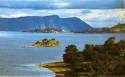 spite Indonesia's reputation for hollow lefts, in North Sumatra right-handers are slightly more prevalent. While Lagundri Bay at Nias has been surfed for decades, it is the more obscure rights like Bawa (a Sunset-like right bowl that holds up to 15 feet) and Treasure Island (a long, hollow, mechanical right peeling for 200 meters) that have attracted the attention of late. Throw a mix of hollow and bowl lefthanders into the picture like Asu, Afulu, the Machine, and many more obscure rights and lefts. spite Indonesia's reputation for hollow lefts, in North Sumatra right-handers are slightly more prevalent. While Lagundri Bay at Nias has been surfed for decades, it is the more obscure rights like Bawa (a Sunset-like right bowl that holds up to 15 feet) and Treasure Island (a long, hollow, mechanical right peeling for 200 meters) that have attracted the attention of late. Throw a mix of hollow and bowl lefthanders into the picture like Asu, Afulu, the Machine, and many more obscure rights and lefts. In contrast to the small island of Bali, North Sumatra province is large with one of the biggest lakes in the world, Toba Lake, at its navel. The continuous mountain of Bukit Barisan, which extends from Aceh at the tip of Sumatra island to Lampung at the bottom of the island, guards the province on the west side, providing home for thick, tropical jungles and lush vegetations. As you go down the western mountains towards the beaches of the east, mountain streams, strong rivers, and gorgeous w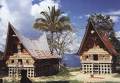 aterfalls will accompany you. aterfalls will accompany you. Along the length of this province crosses Bukit Barisan Mountains with peaks of numerous volcanoes. The land has thick virgin forests, lush vegetation, rice fields, mountain streams, rivers, waterfalls and sandy beaches. It has a rich flora and fauna. An abundance of birds, butterflies, buffaloes, deer, mouse deer, orangutans and many other export commodities make North Sumatra one of the richest provinces in Indonesia, as it produces more than 30 % of Indonesia's exports. The province offers the visitors, especially nature lovers, beautiful tropical panoramas, terraced rice fields, blue mountains, jungle covered hills, white sandy beaches, music, dance and folk arts.
Relative to Bali, North Sumatra has very heterogeneous ethnic groups, and thus, cultures. The people of the 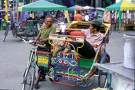 eastern coasts, also known as the Malays (Melayu) have markedly different traditions and culture from Batak highlanders who live around Toba Lake and Samosir Island. Further south, the Mandailings and Angkolas, and Nias Island, have yet more flavors of traditions and culture. Besides them, there are several ethnic groups who live in Medan and other towns of North Sumatra. Its largest groups are Chinese and Indian, who being naturalized Indonesian citizens. Other Indonesian tribes like Acehnese, Minangkabau, Javanese, etc also live in many parts here. Each of the mentioned tribes as well as the ethnic groups has its own dialect, religion, belief eastern coasts, also known as the Malays (Melayu) have markedly different traditions and culture from Batak highlanders who live around Toba Lake and Samosir Island. Further south, the Mandailings and Angkolas, and Nias Island, have yet more flavors of traditions and culture. Besides them, there are several ethnic groups who live in Medan and other towns of North Sumatra. Its largest groups are Chinese and Indian, who being naturalized Indonesian citizens. Other Indonesian tribes like Acehnese, Minangkabau, Javanese, etc also live in many parts here. Each of the mentioned tribes as well as the ethnic groups has its own dialect, religion, belief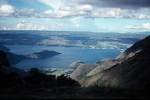 s, traditional customs, etc. Arts and cultures make this region, a paradise for social scientists. Among the ancient Indonesian cultures, which can be seen at Samosir Island, are the centuries old tombs of Batak Toba kings and a stone-table with its benches, where the Siallagan chiefs formerly held meetings. s, traditional customs, etc. Arts and cultures make this region, a paradise for social scientists. Among the ancient Indonesian cultures, which can be seen at Samosir Island, are the centuries old tombs of Batak Toba kings and a stone-table with its benches, where the Siallagan chiefs formerly held meetings. Geographically
North Sumatra province has 70,787 sq km width. Geographically, it is located between 1o and 4o North Latitude and between 98o and 100o East Longitude. The area is Borders with: North side: the special territory of Aceh
South side: West Sumatra Province and Riau Province
West side: Indian Ocean
East side: Malacca Strait
|
|
Information and pictures courtesy of Indonesia Tourism. |
|